Does New Zealand Have Oil? The Truth About Its Fuel Exports
The question "Does NZ have oil?" often elicits a surprising and complex answer. While New Zealand is not a global oil superpower, it certainly possesses domestic oil reserves and actively extracts crude oil. However, the true picture of its fuel supply is far from straightforward. Despite producing its own high-quality crude, New Zealand operates on a nearly 100% refined fuel import model for its domestic needs. This intriguing paradox is shaped by geology, economics, and infrastructure, painting a unique portrait of the nation's energy landscape.
The Paradox of Plenty: New Zealand's Domestic Oil Production
Yes, New Zealand does have oil, and it has been extracting it for decades. The vast majority of this activity is concentrated in the Taranaki region, located on the North Island's west coast, which is home to several active oil and gas fields. Each year, New Zealand typically produces a significant volume of crude oil, ranging between 10 and 20 million barrels annually. To put this into a more daily perspective, as of 2024, New Zealand's oil production stands at approximately 18,675 barrels per day.
What's particularly notable about New Zealand's crude oil is its quality. It's often described as "sweet and light crude oil," a highly desirable type in the international market. This premium quality means it fetches top prices globally, making it a valuable export commodity. You might assume that with domestic production, New Zealand would refine this oil for its own cars and industries. However, this is where the paradox truly emerges: almost all of this domestically produced crude oil is exported. Its primary destinations are often Australia and Singapore, where it can be processed by refineries equipped to handle its specific characteristics.
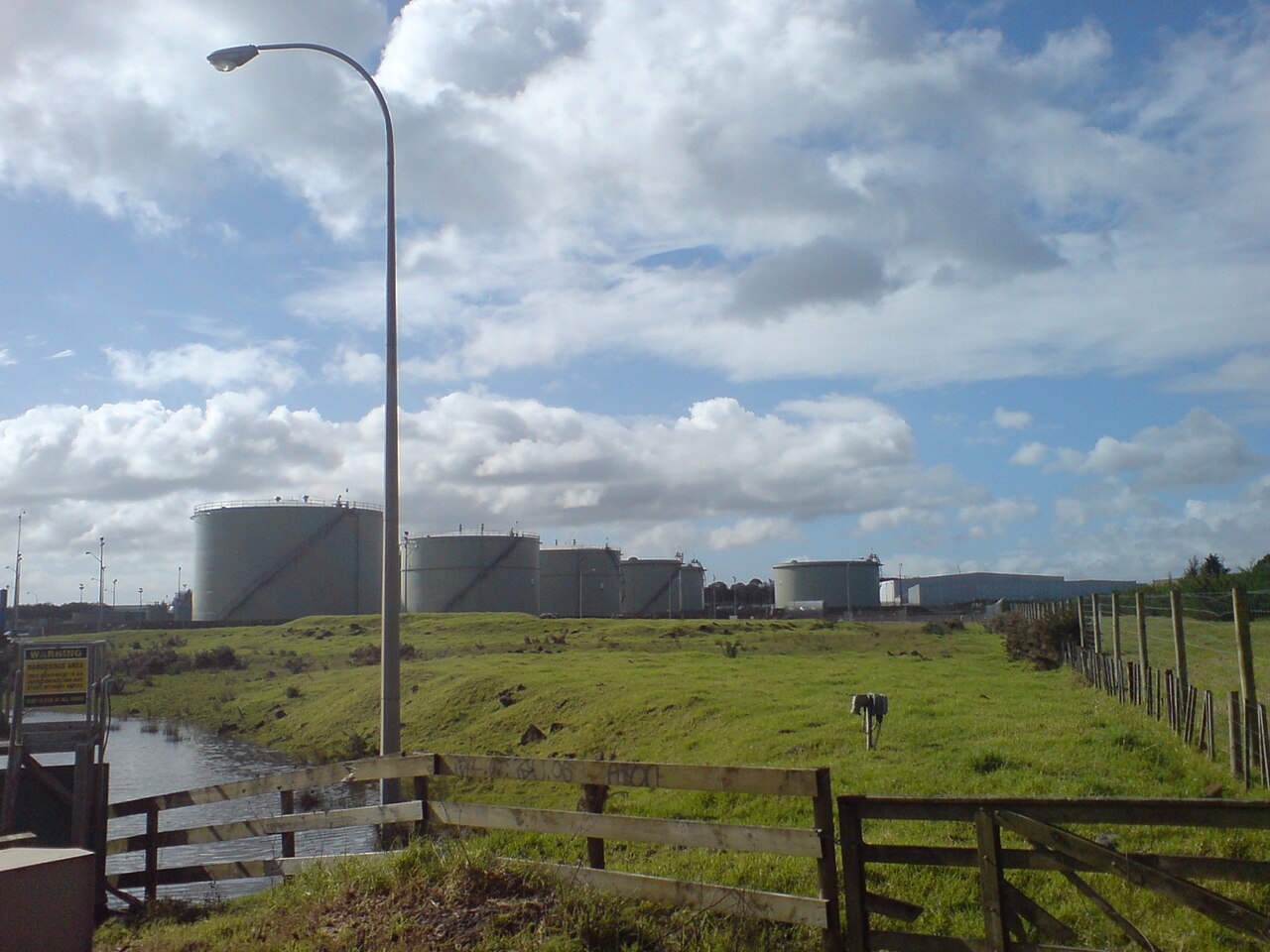
The key reason for this export-oriented approach lies in the historical setup of New Zealand's now-closed Marsden Point refinery. This refinery, which for decades was New Zealand's sole facility for processing crude oil, was never built to specifically handle the country's unique "sweet and light" crude. Instead, it was designed to process different grades of imported crude oil. This fundamental incompatibility, coupled with the economic incentive of exporting a premium product, meant that even when the refinery was operational, New Zealand’s own crude was largely sent overseas. For a deeper dive into this fascinating situation, explore
NZ's Oil Paradox: Why Domestic Crude Is Exported, Not Refined.
A Nation Reliant: New Zealand's Shift to Refined Fuel Imports
New Zealand's reliance on imported fuel is not a recent phenomenon. The nation has historically operated on an "import model," even when its own refinery was active. For many years, it imported raw crude oil, which was then refined at Marsden Point before being distributed domestically. However, a significant shift occurred with the permanent closure of the Marsden Point refinery in April 2022. This decision, accelerated partly by the economic pressures of the COVID-19 pandemic and a global trend towards rationalizing refining capacity, fundamentally changed New Zealand's fuel supply chain.
With the refinery's closure, New Zealand transitioned to a nearly 100% refined fuel import model. This means that instead of importing crude oil to process, the country now imports ready-to-use petrol, diesel, aviation fuel, and other petroleum products directly from overseas refineries. This move streamlines the supply chain in some respects, but it also means New Zealand is entirely dependent on international markets for its processed fuel supply. As one expert noted, "New Zealand has always had an import model – we’ve just moved from importing oil to refined fuel." This transition has profound implications for energy security and supply chain resilience.
The strategic implications of this shift are considerable. While it potentially reduces the operational complexities and environmental footprint associated with domestic refining, it places greater emphasis on reliable international trade routes and relationships. Any disruptions in global supply chains, geopolitical tensions, or sudden price spikes in refined products can have an immediate and direct impact on New Zealand consumers and businesses.
Unpacking New Zealand's Oil Reserves and Consumption
While New Zealand produces oil, its proven reserves are relatively modest on a global scale. As of 2025, New Zealand holds approximately 45,355,000 barrels of proven oil reserves. This places it around #77 in global rankings, accounting for a minuscule 0.0026% of the world's total proven oil reserves.
When we look at consumption, the numbers tell a different story. New Zealand consumes a significant amount of oil daily, reflecting its developed economy and reliance on transportation. As of 2024, the country consumes an average of 159,238 barrels per day. This positions New Zealand at #62 globally for oil consumption, accounting for about 0.16% of the world's total. On a per capita basis, this translates to roughly 1.28 gallons of oil per person per day, or about 468 gallons (11 barrels) per person annually, based on the 2024 population.
Perhaps the most striking statistic regarding New Zealand's oil reserves is their longevity relative to its consumption. Based on 2024 data, New Zealand's proven reserves are equivalent to only 0.8 times its annual consumption levels. This starkly illustrates that, without any imports, New Zealand would have approximately one year's worth of oil left at current consumption rates. This figure, while purely hypothetical given its import model, underscores the nation's fundamental reliance on external sources for its ongoing energy needs. This vulnerability is why understanding
New Zealand's Fuel Reality: Why 1 Year of Reserves Isn't Enough is crucial.
Prior to the refinery closure, New Zealand still imported a substantial portion of its oil. For instance, in 2020, New Zealand imported 40% of its oil consumption, amounting to 60,783 barrels per day out of 150,448 consumed. This historical data further reinforces the long-standing dependency on international supply chains, even when domestic refining was an option.
Beyond the Barrel: Strategic Implications and Future Outlook
New Zealand's unique position as an oil-producing nation that exports its crude and imports all its refined fuel presents a complex set of strategic implications.
Economic Rationale vs. Energy Security:
*
Economic Benefits: Exporting high-quality crude at premium prices and importing refined products can, in theory, be an economically sound strategy. It allows New Zealand to capitalize on its geological assets in a way that maximizes revenue, which can then be used to fund other parts of its economy, including the purchase of refined fuels.
*
Energy Security Concerns: The complete reliance on imported refined fuels introduces significant vulnerabilities. New Zealand is geographically isolated, making long supply chains susceptible to disruptions from natural disasters, geopolitical instability, or shipping crises. Maintaining strategic fuel reserves becomes paramount, as does diversification of import sources.
Future Considerations:
*
Transition to Renewables: New Zealand has ambitious goals to transition towards a low-carbon economy. This includes significant investment in renewable energy sources like hydro, geothermal, and wind power. While this primarily impacts electricity generation, it also signals a long-term strategy to reduce overall fossil fuel dependence.
*
Exploration Policies: Government policies regarding new oil and gas exploration will continue to shape future domestic production. The current trend often leans towards reducing new exploration, reflecting global environmental concerns and commitments to climate change mitigation.
*
Supply Chain Resilience: In a world of increasing volatility, building resilience in the refined fuel supply chain will be critical. This could involve exploring new import partnerships, optimizing logistics, and maintaining robust emergency fuel stocks.
For consumers, understanding this landscape means appreciating the global forces that influence local fuel prices and availability. While New Zealand may produce oil, its domestic energy security is intrinsically linked to international markets and reliable trade.
Conclusion
So, does NZ have oil? Yes, it does, with proven reserves and active extraction in the Taranaki region yielding high-quality crude. However, the answer to how that oil impacts its domestic fuel supply is a resounding "not directly." New Zealand operates under a distinct paradox: it exports nearly all its domestic crude for premium prices and, following the closure of its sole refinery, now imports almost 100% of its refined fuel. This strategy, driven by economic factors and historical infrastructure limitations, positions New Zealand as a highly import-dependent nation for its energy needs, despite its own hydrocarbon assets. As the country navigates the complexities of global energy markets and its transition to a greener future, understanding this intricate relationship between domestic production, international trade, and energy security will remain crucial.